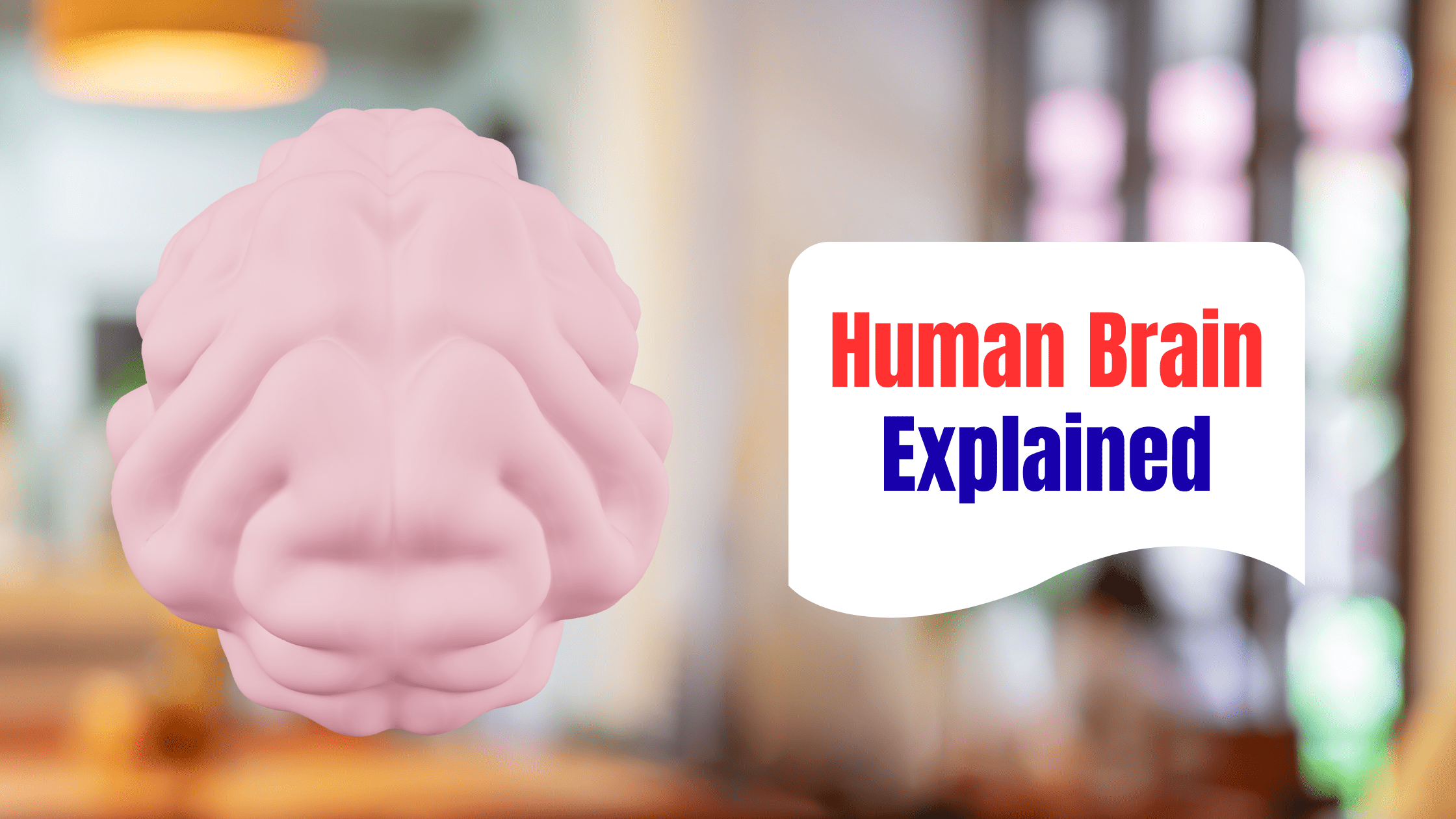
The brain is the most important and functional part of the nervous system. Not even the nervous system, but it is the head of the entire body. You’re reading this right now – who’s doing this? The eyes are watching, the hands are scrolling, the words are entering the mind – there is only one organ behind everything, the brain. We often talk about the heart or lungs, but honestly, without the brain, we wouldn’t be us. You will be surprised to know that the weight is only about one and a half kg, but the responsibility of running the whole body is taken care of alone.
What's the Brain?
Simply put, the brain is the control centre of the body. Thinking, learning, remembering, making decisions, walking, talking – everything is controlled from here.
When you hold a cup of hot tea and suddenly release it, it reflexes. Again, when you calculate, decide – that is also the work of the brain. The funny thing is, most of the time we don’t realise how fast the brain is working.
Structure/Anatomy
The brain looks complicated, but it is understandable. There are three main parts: Cerebrum, Cerebellum, and Brainstem.
- Cerebrum is the largest part. Thoughts, memories, emotions – that’s what happens here.
- Cerebellum maintains the balance and movement of the body.
- Brainstem controls the basic functions of breathing, heartbeat, blood pressure, sleep, etc.
Suppose an office – Cerebrum is the manager, Cerebellum is the supervisor, and Brainstem is the power and water supply. If these things don’t work, will the office continue?
Location
The brain is inside the skull, protected by strong bones. There are three layers of meninges and cerebrospinal fluid around, which protect the brain from shock. This is why head injuries are so important.
Function
Since it is the responsibility of the whole body, it is difficult to complete its list of tasks. It’s –
- Supports or controls all parts of the body (directly or indirectly)
- Walking, writing, speaking, taste, smell, touch, hearing, vision and even every small thing that happens in our body
- Breathing, blood pressure, heart rate, etc
- Thinking, calculations
- Understands the emotions
- Storage of memories
- Control of emotions
- Develops the ability to learn
You’re laughing or crying – it’s the brain’s decision.
How It Works
The brain works through nerve cells called neurons. They send chemical and electrical messages to each other.
Consider an ordinary person. One day, after a stroke, things suddenly came to a head. Then it was understood how big changes occur when a small part of the brain does not work properly. The brain is always working together, even though it is different.
Common Diseases and Disorders
Some problems are more common in our country and the surrounding areas. Such as-
- Stroke
- Migraines
- Depression
- Traumatic brain injury (TBI)
- Epilepsy
- Alzheimer’s disease
- Parkinson’s disease
- Brain tumours
- Depression and anxiety disorders
Sometimes people do not want to consider mental problems as a disease, but it is also a matter of the brain.
Symptoms of an Unhealthy Brain
All the symptoms do not come together. Still, it’s necessary to be cautious.
- Loss of memory
- Frequent headaches
- Unable to concentrate
- Sudden behaviour change
- Slurred speech
- Weakness in the hands and feet
- Sleeping problems
- Sudden weakness or paralysis
These should not be considered as’ stress’.
Causes and Risk Factors
- Long-term stress
- Lack of sleep
- High blood pressure
- Diabetes
- Smoking and drinking
- Injury to the head
- Lack of nutrition
- Old age
- Work pressure, irregular life in many region – these are the major reasons.
How to Keep it Healthy Naturally
- Take care of the brain without medication:
- Have sufficient sleep every day (7 to 9 hours)
- Walking or light exercise
- Trying to learn something new
- Break from the phone/screen
- Vegetables, fruits, nuts, fish
- Drink plenty of water
- Meditation or quiet time
Although it sounds simple, the implications are profound.
Things to Know
- The brain weighs only 1.3-1.4 kg on average, but it uses about 20% of the body’s oxygen and energy.
- There are about 86 billion nerve cells in the brain.
- The human brain is made up approximately 75% water.
- The brain does not fully mature until about 25 years of age.
- The brain determines who you are – your personality, memories, likes and dislikes all come from here. In a way, there would be no “I” without the brain.
- The ability of the brain to change itself is called neuroplasticity.
Conclusion
The brain is our identity. It all depends on what we think and what we decide. So don’t ignore it. A little sleep, a little awareness, and a little care – these three are the greatest gifts to the brain. The human body, even the brain, is a machine that cannot be fully understood. Be as careful as you possibly can. Remember:
If health is good, life is very beautiful and happy.
Caution: This information is shared for general awareness and educational purposes. Everyone’s body is different, so if you have ongoing concerns, it’s always a good idea to consult a healthcare professional. Use this information mindfully.