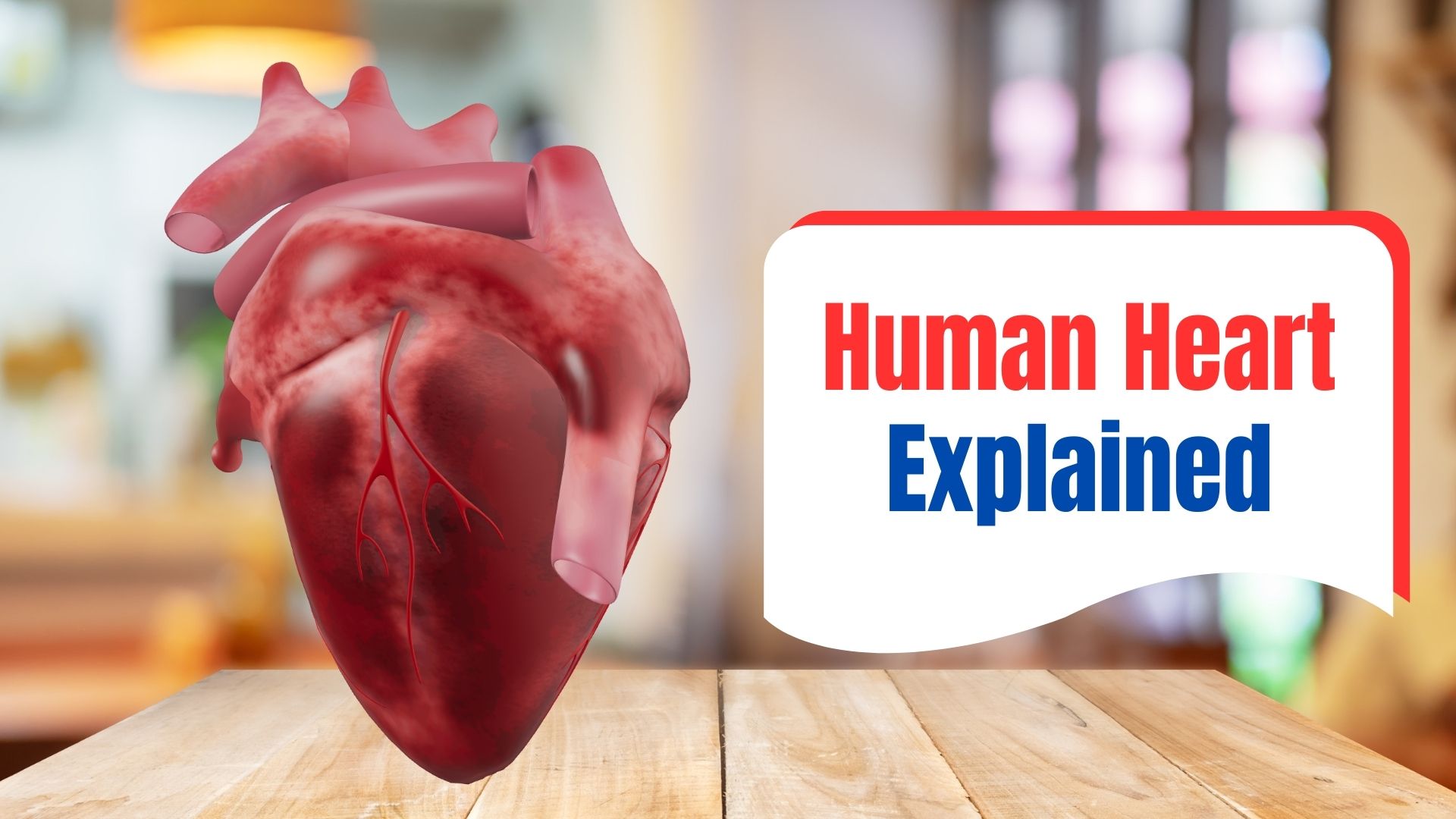
The human heart is an important organ among the various organs of our body. How many things we do every day — walk, run, laugh, get angry, etc. — now think of an organ whose health and illness slightly depend on these. That is our heart. The heart is one of the most vital organs in our body for survival. Interestingly, many people understand the importance of their heart only when they have a little pain or something strange appears in the report. You might be surprised to hear that this little heart keeps us alive by beating about 1 lakh times a day. So let’s know about it in detail –
Definition of the Human Heart
Simply put, the heart is the pumping machine of our body. It is a muscle pump that pumps blood throughout the body. The heart collects used (oxygen-poor) blood from the rest of the body, then sends that blood to the lungs to pick up oxygen. Oxygen-rich blood returns from the lungs, then the heart sends that oxygenated blood throughout the body. The heart is somehow connected to our emotions, fears, excitement – everything. Have you ever noticed that when you are afraid, your heart beats a little louder? Have you ever heard your favourite song and felt like your heart softened a little? That is his magic.
For example, a deep tube well in a village to carry water from house to house – the heart works the same way, but more tiringly.
Structure / Anatomy
In simple words –The human heart is basically a four-chambered house:
- Two upper rooms: Right Atrium, Left Atrium
- Two lower chambers: Right Ventricle, Left Ventricle
- Valves (like doors), to prevent blood from flowing in the opposite direction
- Arteries and veins, which transport blood like roads
A small example will make the point clearer. Suppose you are going from Silchar to Kolkata. You have to take the bus first (Atrium), then take the train (Ventricle) and take the long route. This is how the blood also moves from the small chamber to the large chamber. A strong muscular wall surrounds the heart, and there are four valves that act like doors – preventing blood from going in the wrong direction.
Location
Most people think the heart is on the left side. Not quite the left, actually—in the middle of the chest, just behind the sternum, leaning slightly to the left.
If you feel with your hand on the left side, the place where you get the “thump” is the tip midpoint.
Functions of the Human Heart
In a word—getting the blood pumping. But the matter is actually a bit bigger.
- Providing oxygen to the body
- Delivery of nutrients
- Returning wastes (eg carbon dioxide).
- Maintaining body temperature
- Hormone transport
Think of it like a bank—it sends money (blood) where it’s needed, and collects it again.
How the Human Heart Works
You will be really surprised to hear the work of the heart.
- The right atrium receives old blood from the body
- Sends it to the right ventricle
- From there, the blood goes to the lungs to get oxygen
- Oxygenated blood returns to the left atrium
- Then goes to the left ventricle
- Then that powerful pump circulates the blood throughout the body
It happens so fast that we don’t even realise it.
Common Diseases & Disorders
It is found in Bangladesh / India.
- Coronary artery disease (source)
- Heart attack
- Heart failure
- Arrhythmia (irregular heartbeat)
- problems with the heart
- Stress due to high blood pressure
I had a relative – he always thought chest pain meant gas. He later suffered a heart attack. Therefore, small things should not be taken lightly.
Symptoms of an Unhealthy Heart
One question – if we are ill, we understand quickly. But what if I have a bad heart? Many can’t.
Here are some simple signs…
- breathing difficulties when walking or going up stairs
- Pressure in the left or middle chest
- Suddenly fatigued
- Swelling of the body
- Tightness in the throat
- Dizziness
- Irregular pulse
Not everyone gets all the symptoms – that’s the danger of heart disease.
Causes and Risk Factors
There are several reasons why the human heart is at increased risk of heart disease:
- Too much fried food
- Lack of sleep.
- Excessive stress
- Smoking
- Diabetes
- A sedentary lifestyle
- Family history of heart disease
- Less time in front of the screen
Sometimes, even if there is no reason, heart disease can occur – it’s terrible.
How to Keep it Healthy Naturally?
Here are some natural heart health tips you can explore. These are my real experiences. It’s not very scientific, but it works.
- Walk for 30 minutes a day
- 1 glass of warm water in the morning
- Eat more fruits and vegetables
- Reduce oil consumption
- Almonds/peanuts 2-3 times a week
- Laughter – Yes, it reduces stress.
- Turn off the phone at night.
- Getting enough sleep
- Check your blood pressure and sugar regularly.
Things to Know
- The heart beats how many times a day?
About 1,00,000 times. Truly incredible!
- What kind of food is good for the heart?
Leaves – vegetables, oats, fish, fruits, nuts, and low-fat cooked foods.
- Is stress bad for your heart?
Yes, with prolonged stress, the heart rhythm is disturbed and the risk of blockage increases.
- A heart attack or chest pain?
No, but the type of pain is different. Pressure in the middle of the chest, spreading to the arms/neck/hips – these are dangerous.
- Do you have heart problems when you don’t sleep?
Yes, sleeping less for a long time can increase blood pressure and weaken the heart.
Conclusion
We talk a lot about the heart, but care less. But it’s the little pump that saves our day. If we walk a little, take a little less stress, eat a little better in the middle of the race of life, the heart will be able to work properly throughout our lives.
Pay attention to your heart today – believe me, it will thank you!
Caution: This information is shared for general awareness and educational purposes. Everyone’s body is different, so if you have ongoing concerns, it’s always a good idea to consult a healthcare professional. Use this information mindfully.